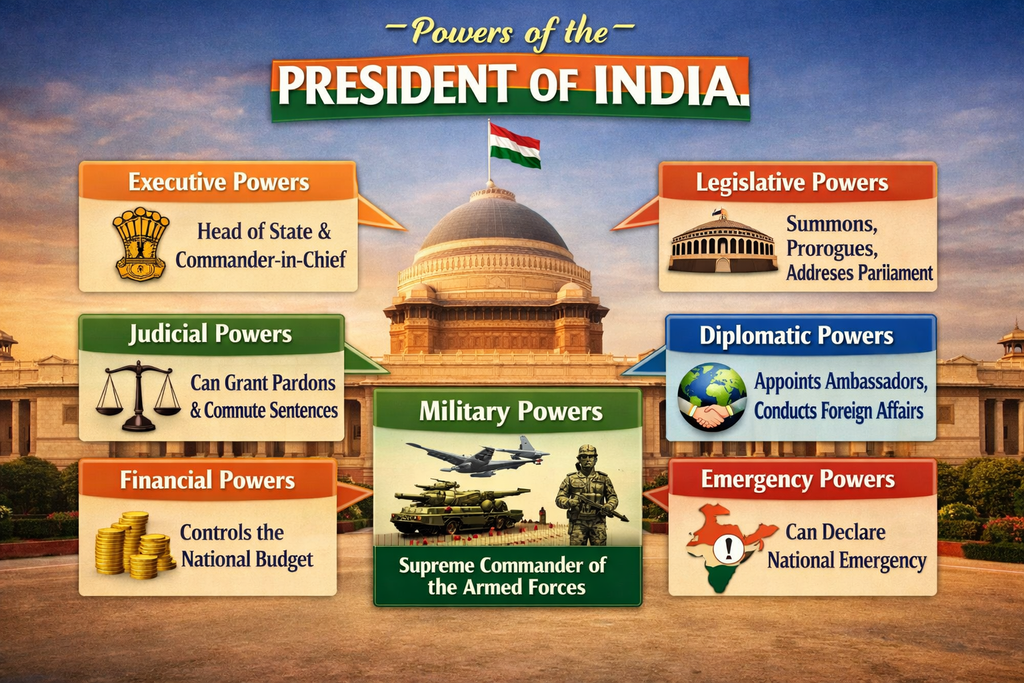
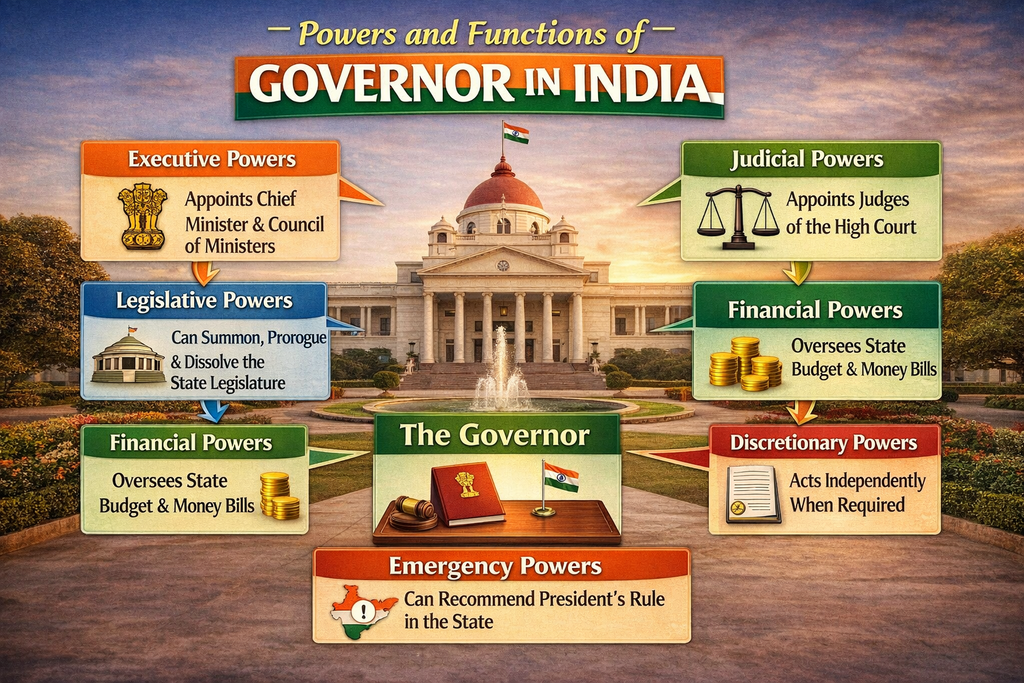
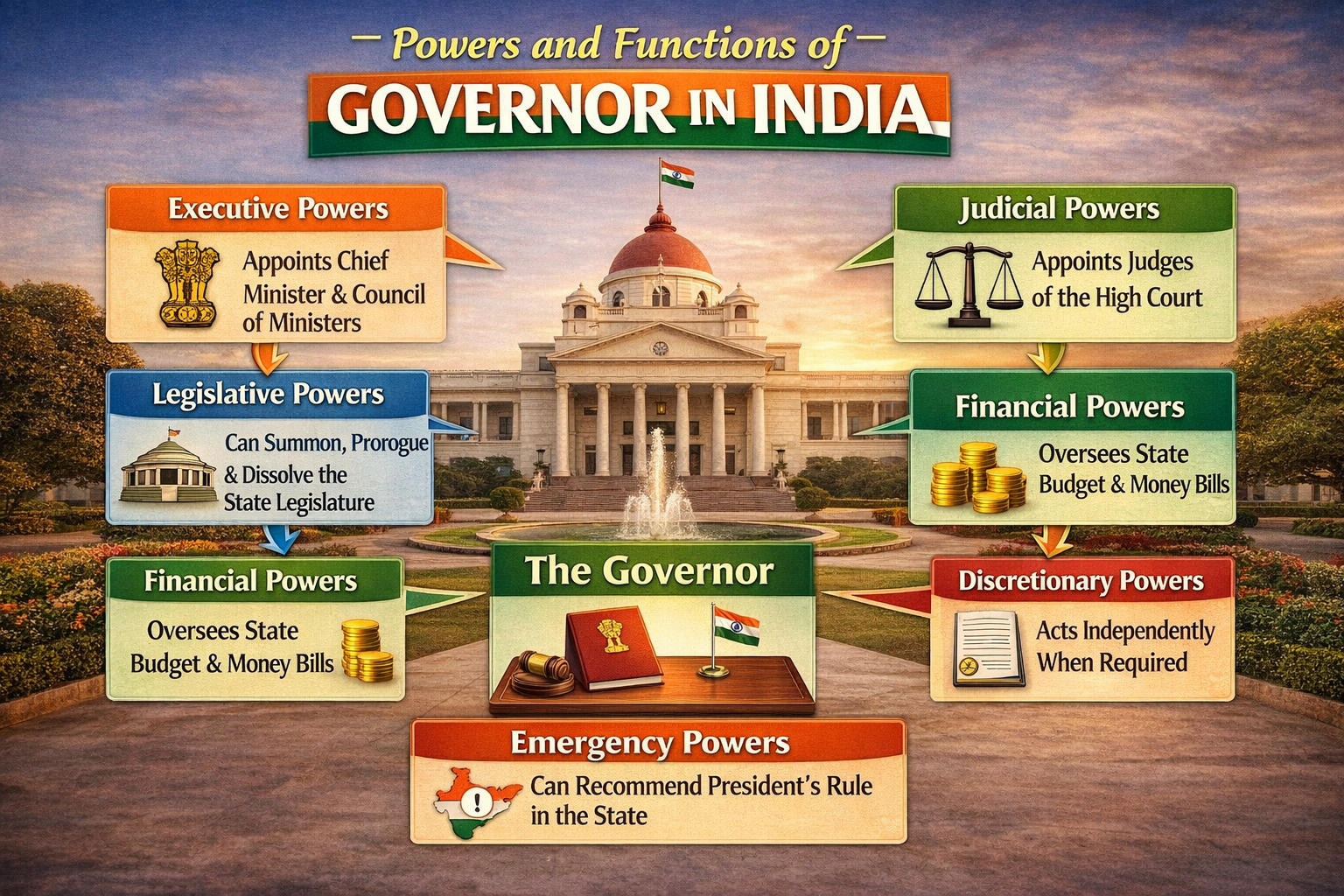
The powers and functions of the Governor in India are analogous to those of the President at the Union level, representing the executive head of a State. These powers are divided into executive, legislative, financial, judicial, and discretionary categories as laid out in the Constitution.
Executive Powers and Functions
- Executive Head: The executive power of the State is vested in the Governor and is exercised either directly or through subordinate officers.
- Governmental Actions: All executive actions of the State Government are formally taken in the name of the Governor.
- Appointments: The Governor appoints the Chief Minister and other Ministers on the advice of the Chief Minister; these Ministers hold office during the Governor’s pleasure.
- High-Ranking Officials: The Governor appoints the Advocate-General for the State and the State Election Commissioner.
- Administrative Rules: The Governor makes rules for the convenient transaction of the State Government's business and for the allocation of work among Ministers.
- Information Rights: The Governor has the right to be informed by the Chief Minister of all decisions regarding the administration and legislative proposals of the State.
Legislative Powers and Functions
- Sessions of Legislature: The Governor summons and prorogues the House(s) of the State Legislature and can dissolve the Legislative Assembly.
- Addressing the Legislature: The Governor may address either House or both Houses assembled together and can send messages regarding pending Bills.
- Assent to Bills: Every Bill passed by the State Legislature must be presented to the Governor, who may:
- Give assent.
- Withhold assent.
- Return the Bill (if not a Money Bill) for reconsideration.
- Reserve the Bill for the consideration of the President.
- Nominations: In States with a Legislative Council, the Governor nominates one-sixth of its members from persons with special knowledge in literature, science, art, co-operative movement, and social service.
- Ordinance Power: When the State Legislature is not in session, the Governor can promulgate Ordinances if immediate action is required, which carry the same force as an Act of the Legislature.
Financial Powers and Functions
- Budget Presentation: The Governor ensures that the Annual Financial Statement (Budget) is laid before the State Legislature each financial year.
- Demands for Grants: No demand for a grant can be made in the Legislative Assembly except on the recommendation of the Governor.
- Money Bills: A Bill or amendment making provision for specified financial matters cannot be introduced or moved except on the Governor’s recommendation.
- Finance Commission: The Governor constitutes a Finance Commission every five years to review the financial position of Panchayats and Municipalities.
- Contingency Fund: The Contingency Fund of the State is at the disposal of the Governor to meet unforeseen expenditure pending legislative authorisation.
Judicial Powers and Functions
- Pardoning Power: The Governor can grant pardons, reprieves, respites, or remissions of punishment, and suspend, remit, or commute sentences for offences against laws to which the executive power of the State extends.
- Judicial Appointments: The Governor is consulted by the President in the appointment of Judges of the High Court.
- Subordinate Courts: Appointments, postings, and promotions of District Judges are made by the Governor in consultation with the High Court.
Discretionary Powers and Special Responsibilities
- Constitutional Discretion: The Governor may act in their discretion where the Constitution specifically requires it, such as in certain matters relating to the administration of tribal areas in the Sixth Schedule.
- Report on State Emergency: Under Article 356, if satisfied that the State government cannot be carried on in accordance with the Constitution, the Governor sends a report to the President, which may lead to the proclamation of President's Rule.
- Special Responsibilities: The Governor has special responsibilities in certain States, such as for the establishment of development boards in Maharashtra and Gujarat or maintaining law and order in Nagaland and Arunachal Pradesh.
Constitutional Protections
- The Governor is not answerable to any court for the exercise and performance of the powers and duties of their office.
- No criminal proceedings can be instituted against a Governor during their term, and no process for their arrest or imprisonment can be issued.